Industry News

A Down Market Makes Every Missed Lead More Expensive
RV retail registrations fell 19% in May 2026 (SSI). See why the dealers gaining share capture the demand others miss, and the four things they do differently.

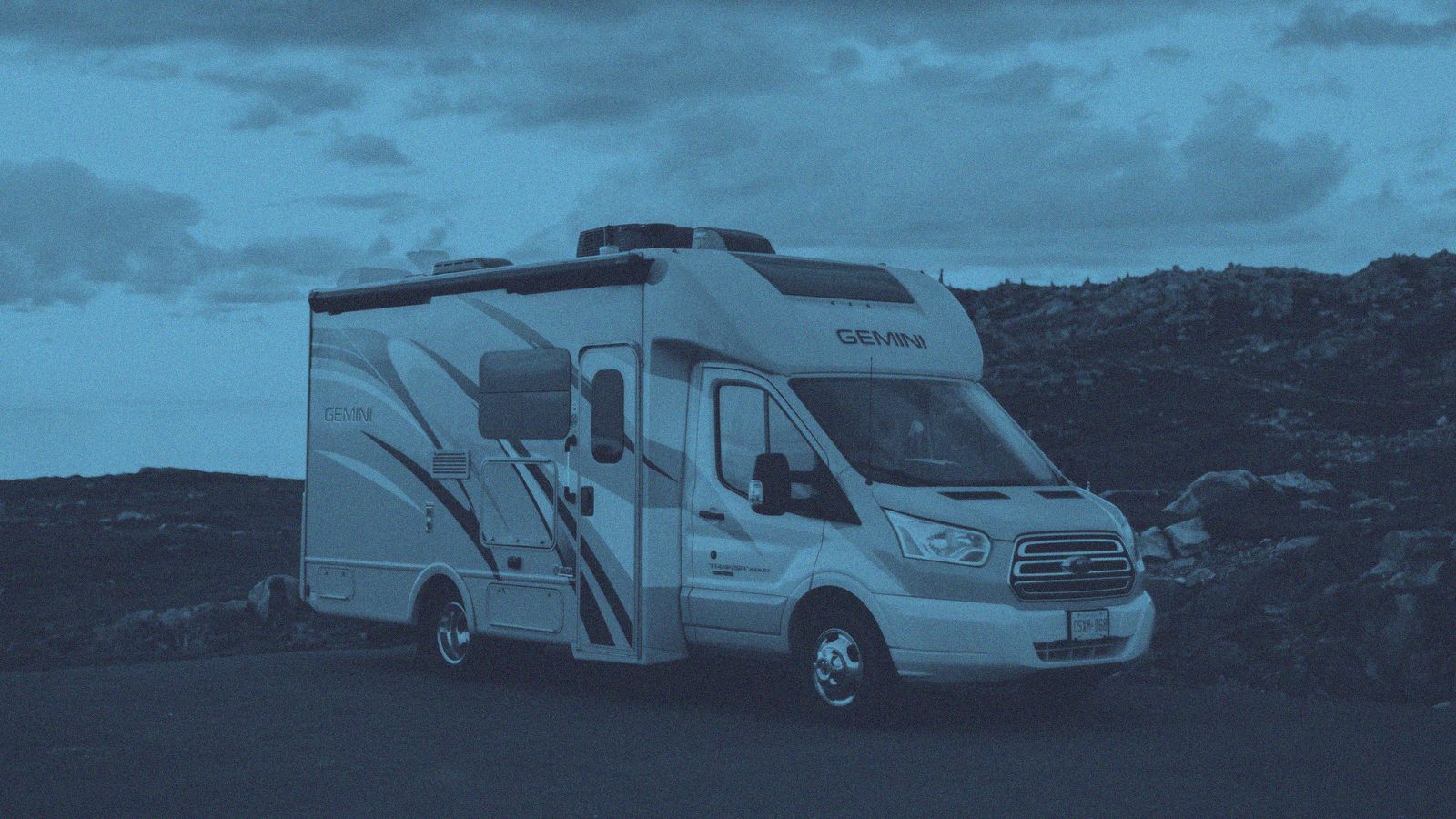
A down market does not make the problem of missing leads smaller. It makes it bigger. When the total pool of buyers shrinks, every unconverted lead becomes a larger share of the revenue still on the table. The dealers outperforming their peers in 2026 already know it.
Direct Answer
RV industry new retail unit registrations declined 19.04% year over year in May 2026, the ninth consecutive month of decline and the 17th down month out of the last 19 since October 2024, with motorized RVs down 13.52% and towable RVs down 19.61%, per Statistical Surveys Inc. (SSI) retail registration data. The one segment approaching recovery is used RVs, now nearly flat at -2.41%. Industry analysis points to technology adoption, specifically AI and automation applied to lead capture, as the primary difference between dealers gaining market share and dealers losing it.
A Down Market Amplifies Every Missed Lead
Picture two versions of the same dealership. In a market moving units at full clip, a missed after-hours leadstings. In a market where new-unit demand has fallen roughly a fifth year over year, the same missed lead costs more: the denominator shrank, so the value ofevery opportunity you let slip went up. This is the arithmetic of a down cycle that most dealers feel but few model explicitly. It is also why “we will rideit out” quietly becomes the most expensive plan on the lot. No new-unit category is growing its way out of this.
The demand did not evaporate. It relocated. The used market has climbed back from -8.61% a year ago to -2.41%,with used Class B (+0.61%) and used travel trailers (+0.05%) now positive. The SSI analysis points to the mechanism: buyer behavior in this cycle tracks financing conditions, interest rates and the federal funds rate, far more than consumer sentiment, which showed a near-zero -0.24% correlation. For the salesfloor, that means the buyer is still there and still shopping, just trading down and moving deliberately. The question is not whether demand exists. It is who captures it.
That is the pattern Harvard Business Review documented in “Roaring Out of Recession.” The businesses that leave a downturn with more share are not the ones that cut hardest, and not the ones that spend blindly. They pair operational discipline with selective investment in the capability that compounds. In 2026, for an RV dealer, that capability is the infrastructure that captures and converts every buyer who raises a hand, at any hour, while competitors are still returning yesterday's voicemails.
19.04% decline in RV new retail registrations, year over year, May 2026. Motorized down 13.52%, towables down 19.61%. Class A (-24.75%)led the decline and no new segment grew. Used RVs nearly recovered to flat(-2.41%). Ninth straight month of decline. Source: Statistical Surveys Inc., State of the RV Industry, May 2026
The Dealer Who Wins the Down Cycle Is Capturing Demand Everyone Else Is Missing
A down market holds a fixed pool of remaining demand. The only question is distribution. Dealers who convert a higher share of the buyers who reach their websites take share from those who do not. They win it through the quality of their engagement infrastructure, not through discounting.
The Lahzo platform data across the RV dealer portfolio shows the funnel performance that separates share gainers from share losers. 4.3% of unique website visitors engage the AI Sales Agent. Of those real conversations, 49.8% become qualified leads. Of those leads, 6.5% book an appointment inside the chat. When 23.5% of dealer leads currently miss a follow-up within 24 hours, the dealer who captures and answers all of them holds a structural advantage that does not depend on the market.
23.5% of dealer leads never get a follow-up within 24 hours. In a market down 19%, that unworked quarter of the pipeline is the line between gaining share and losing it. (Foureyes, Q3 to Q4 2024)
What the Technology-Adopting Dealers Are Actually Doing
Industry analysis flags a fair warning: some dealers who installed generic AI chatbots angered customers instead of converting them. That is the difference between a FAQ bot and an AI Sales Agent trained on live inventory and vertical-specific buyer behavior. The first is a cost center that creates friction. The second is a revenue engine that captures demand no human team can cover.
Dealers outperforming their peer set in a down market do four things specifically:
1. They answer instantly, at every hour. The AI Sales Agent responds to the after-hours and weekend buyer in under a minute, not the next business day.
2. They qualify inside the conversation. The agent works live inventory and real buyer behavior to turn a question into a qualified lead, then books the appointment in the chat.
3. They cover the whole demand pool, not just the easy part. No lead sits unworked, so a contracting market does not quietly shrink their capture rate.
They close the loop to revenue. Every ad, conversation, and outcome feeds one system, so the dealer sees what actually drives sales and reinvests there instead of in vanity metrics
"Seeing the AI Sales Agent leads was a nice surprise. I had no idea that those leads were possible. I find the quality of the leads is very good." (Head of Buying, a major RV group and Lahzo client)
Down Markets Separate the Dealers Who Invested in Infrastructure From Those Who Didn't
See how Lahzo's AI Sales Engine performs on your inventory. 20 minutes, your actual units, no deck.
Sources
1. Statistical Surveys Inc., State of the RV Industry, May 2026(https://www.statisticalsurveys.com/2026/07/07/state-of-the-rv-industry-may-2026/)
2. SSI: May Retail Registrations Decreased 19% Year-Over-Year,RVBusiness(https://rvbusiness.com/ssi-may-retail-registrations-decreased-19-year-over-year/)
3. Ranjay Gulati, Nitin Nohria, Franz Wohlgezogen, “Roaring Outof Recession,” Harvard Business Review(https://hbr.org/2010/03/roaring-out-of-recession)
4. Foureyes lead response benchmark, Q3 to Q4 2024
Stay current
Get the thinking before it gets published
New Perspectives content, Insider Series episodes, and Lahzo's take on what is changing in AI-powered revenue growth. Straight to your inbox when it goes live. No weekly roundups. No noise.
Thank you! Your submission has been received!
Oops! Something went wrong while submitting the form.
No spam. Unsubscribe anytime.
Keep reading
All perspectives










.jpg)
You already know the demand is there.
See how Lahzo builds a 24/7 sales engine for your business using your market, your numbers.